

Scrolling through TikTok comments or a group chat, you have probably seen someone type “I’m feening for tacos right now” and wondered what exactly that word means.
Feen is one of those slang terms that looks like a typo but actually carries a very real, widely understood meaning across texting, social media, and music culture.
In short, feen means to crave or want something so badly that it feels like an obsession. It comes from the word fiend, and while it originally described drug cravings, people now use it for anything from coffee to a new phone to attention from a crush.
There is also a completely separate Irish slang meaning worth knowing so you never mix the two up.
Quick Definition Of Feen
At its core, feen is an informal spelling and pronunciation of fiend, used as slang to describe an intense craving or a person consumed by that craving. If someone says they are “feening” for pizza, they mean they want it badly, right now, and cannot stop thinking about it.
The word works as both a verb (to feen or to be feening) and a noun (a feen), and its meaning shifts slightly depending on which form is used and what it’s attached to.
What Does Feen Mean In Text Messages?
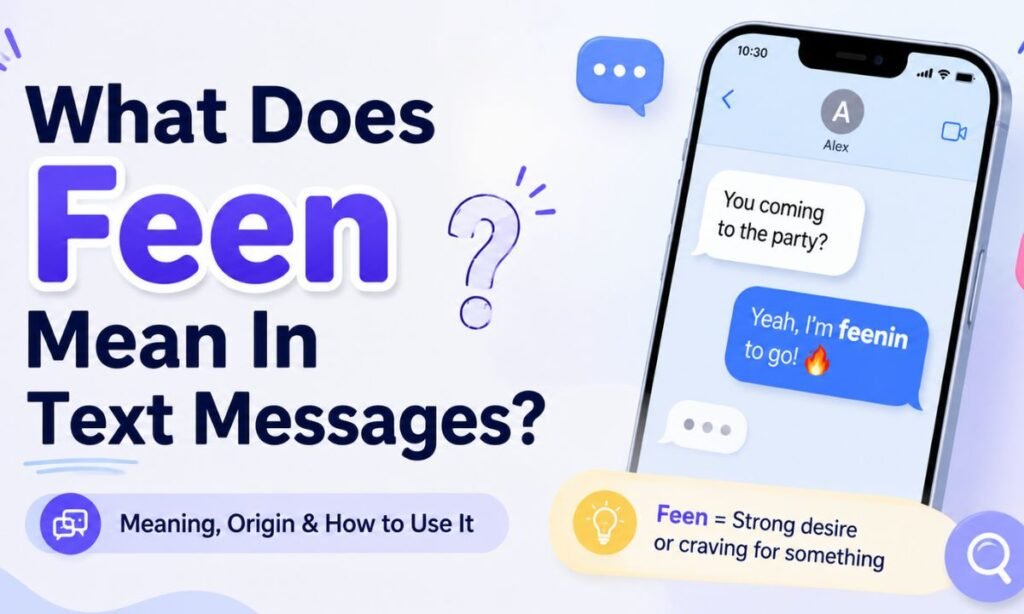
In texts, DMs, and comment sections, feen almost always signals a strong, borderline desperate want. Someone might text “feening for a nap” after a long shift, or “she’s feening for a reply” when waiting on someone to text back.
The meaning always depends on context: feening for food is playful, feening for a substance carries a heavier, more literal weight. Because tone doesn’t come through in text the way it does in speech, readers rely on the surrounding words to figure out whether the sender is joking or serious.
Feen Vs Feening: How The Two Forms Differ
Feen and feening are close cousins, but they are not used identically.
- Feen (noun) describes the person: “He’s a real feen for sneakers.”
- Feen (verb, informal) can express the craving itself: “I feen for sleep.”
- Feening (present participle) is the most common form online and in speech, describing the ongoing act of craving: “I’m feening for a burger.”
Feening tends to sound more natural in a sentence because it mirrors how English speakers already use other -ing verbs, which is likely why it shows up more often in captions and comments than the plain verb form does.
Examples Of Feening In Everyday Conversation
Real, everyday usage makes the meaning click faster than any dictionary definition. Here are a few natural examples people actually type or say.
- “I’m feening for pizza after that workout.”
- “She’s feening for that new phone drop.”
- “He’s been feening for the weekend since Monday morning.”
- “Ngl I’m feening for a coffee right now.”
How People Use Feen On TikTok And Social Media
On TikTok, Instagram, and X, feen shows up constantly in captions, comment threads, and reaction videos, usually with a playful or exaggerated tone. Someone might caption a video of themselves staring at a food delivery app “me feening at 2am,” and the humor comes from how relatable that mild obsession feels.
Online usage leans toward comedy and exaggeration far more than it leans toward anything serious, which is part of why the word has spread so widely among younger users.
Is Feen Always About Drugs?
No, and this is one of the most common misconceptions people search for. Feen has historical roots in describing drug addiction and withdrawal-driven cravings, and that meaning still exists in clinical and recovery-related conversations.
But modern casual slang has broadened the word considerably, applying it to food, video games, shopping, relationships, sleep, and even attention. Context is everything: “feening for a hit” reads very differently than “feening for tacos,” even though the grammar is identical.
Is Feen Short For Fiend?
Yes, feen functions as an informal, phonetic shortening of fiend. Fiend is the standard English word, historically meaning an evil spirit or a person with an intense, almost demonic craving.
Over time, especially in African American Vernacular English and Southern slang, the pronunciation softened into “feen,” and that spelling eventually made its way into text messages, lyrics, and internet slang.
Feen Vs Fiend: What’s The Difference?
| Feature | Fiend | Feen |
| Spelling type | Standard English | Informal slang spelling |
| Best used in | Formal writing, dictionaries | Texts, social media, casual speech |
| Example | “He’s a fiend for chocolate.” | “He’s a feen for chocolate.” |
| Formality level | Higher, dictionary-recognized | Lower, dialect and slang-based |
Is Feen A Correct English Word?
Feen is not standard English and won’t appear in most formal dictionaries as a primary entry.
It is a recognized slang and dialect term, though, which means it’s perfectly fine in texting, social captions, or casual conversation but best avoided in essays, emails, or professional writing where fiend is the safer, grammatically accepted choice.
Feen Meaning In Rap And Hip-Hop
Feen and feening have deep roots in hip-hop and R&B, where artists have used the word for decades to describe overwhelming desire, whether for a person, a substance, or a feeling. The word’s rhythm and phonetic punch make it a natural fit for lyrics, which is a major reason it spread into everyday slang long before social media existed.
In songs, the craving described can be literal or purely metaphorical, so listeners typically lean on the rest of the verse to figure out which one the artist means.
Why Feen Shows Up In Songs And Online Slang
Music culture has always been one of the fastest paths for slang to reach a mainstream audience, and feen is a textbook example.
A word coined in regional dialect gets picked up by musicians, repeated in popular songs, then recycled by fans on social media until it becomes part of everyday internet vocabulary. That cycle explains why a decades-old slang term still feels current in 2026 comment sections.
Feen Meaning Examples In Real Sentences
Seeing the word used across different situations helps lock in the meaning far better than a single definition does.
I’m Feening For It
This phrase simply means “I want it intensely right now.” It works for food, sleep, a purchase, or almost anything someone is impatiently anticipating.
He’s A Feen For Coffee
Here, feen functions as a noun describing a person’s identity trait, similar to calling someone a “coffee addict” in a lighthearted, non-clinical way.
She’s Feening For Attention
This figurative use criticizes or teases someone who seems to be seeking validation or notice from others, often in a slightly judgmental tone.
I’m Feening To Go Home
This version pairs feen with an infinitive verb to express urgency, meaning the person badly wants to leave and can’t wait to get there.
What Does It Mean When Someone Calls You A Feen?
Being called a feen is not automatically an insult. Tone, relationship, and context decide whether it’s a joke among friends, a lighthearted observation, or a genuine dig. A friend saying “you’re such a feen for fast food” is teasing; a stranger using it in an argument likely means it more negatively.
Positive, Negative, Or Playful Meaning?
Among friends, the word is usually affectionate or funny. In more serious or unfamiliar settings, it can sound judgmental, especially if it’s tied to a real habit someone is sensitive about.
How To Tell What Someone Means By Feen
Look at three things: what they’re craving, who is saying it, and whether the conversation is lighthearted or serious. Those three clues almost always reveal the intended tone.
Does Feen Have Another Meaning?
Yes, and this is the meaning most Americans have never heard of.
Feen As Irish Slang For Man Or Guy
In Ireland, particularly in Cork, Limerick, and other parts of Munster, feen is completely unrelated slang meaning “man,” “guy,” or “bloke,” often traced back to Irish Traveller language. A sentence like “who’s that feen over there” simply asks who that man is, with zero connection to craving or addiction.
Why Context And Region Matter
Because these two meanings are unrelated, the surrounding sentence and the speaker’s location or dialect determine which one applies. An Irish sentence about a “feen” walking down the street has nothing to do with cravings, while an American caption about “feening” almost always does.
Feen Synonyms And Similar Slang Words
| Synonym | Typical Tone | Best Context |
| Crave | Neutral, mild | Everyday, formal-adjacent |
| Fiend | Neutral to informal | Slightly more accepted in writing |
| Jonesing | Informal, intense | Casual speech, older slang |
| Hooked | Informal | Habits, entertainment, food |
| Obsessed | Neutral, common | Broad, widely understood |
| Addicted | Can be literal or exaggerated | Both casual and serious contexts |
Feen Vs Craving Vs Obsessed
Craving is the mildest and most acceptable in formal writing. Obsessed sits in the middle, common in everyday speech without sounding overly slangy. Feen is the most casual and dialect-rooted of the three, best reserved for texting, captions, and informal conversation rather than professional writing.
How To Use Feen In A Sentence
Once the meaning clicks, using the word naturally becomes easy.
Casual examples:
- “I’m feening for something sweet.”
- “That trailer has me feening for the movie already.”
- “We’re all feening for summer break.”
- “My dog is feening for a walk right now.”
- “I’ve been feening for a road trip all month.”
Texting examples:
- “ngl I’m feening rn, order something”
- “bro is feening for a reply, answer him”
- “feening for the weekend fr”
When Not To Use Feen
Avoid feen in formal emails, academic papers, resumes, or professional documents, since it reads as slang rather than standard English. In those settings, words like crave, desire, or eager communicate the same idea without sounding out of place.
Is Feen A Gen Z Slang Word?
Not originally, though Gen Z has embraced and spread it widely online.
Who Actually Uses Feen?
Feen predates current internet slang trends by decades, showing up in hip-hop and R&B as far back as the early 1990s. Millennials and Gen X helped keep the word alive through music, and Gen Z simply gave it a second life through memes, captions, and short-form video.
Is Feen Still Used Today?
Yes, feen remains active across TikTok, Instagram, X, and everyday texting in 2026, especially in food, gaming, and pop culture contexts where exaggerated cravings make for relatable, shareable content.
Freequently Asked Questions
What does feen mean in text?
Feen in text means to want or crave something intensely, usually written playfully rather than literally.
What does feening mean in slang?
Feening means actively craving or obsessing over something, often used as “I’m feening for…” in casual speech.
Is feen short for fiend?
Yes, feen is an informal, phonetic spelling of fiend, adapted through slang and dialect over time.
Is feen a real word?
It’s a recognized slang term, not standard dictionary English, so it fits casual writing better than formal writing.
Is feen a bad word?
No, feen isn’t inherently offensive, though tone and context can make it sound teasing or critical.
What does “I’m feening for you” mean?
It means someone badly wants to see or be with you, similar to saying they miss you intensely.
What does feen mean in rap?
In rap, feen usually describes intense desire, whether for a person, feeling, or substance, depending on the verse.
Conclusion
Feen usually means strongly wanting, craving, or obsessing over something in modern slang, most often used in playful, everyday contexts like food, entertainment, or attention rather than anything serious.
It comes from fiend and shows up constantly in texts, captions, and song lyrics. Just remember the separate Irish meaning of “man” or “guy,” since context and region decide which definition actually applies.