

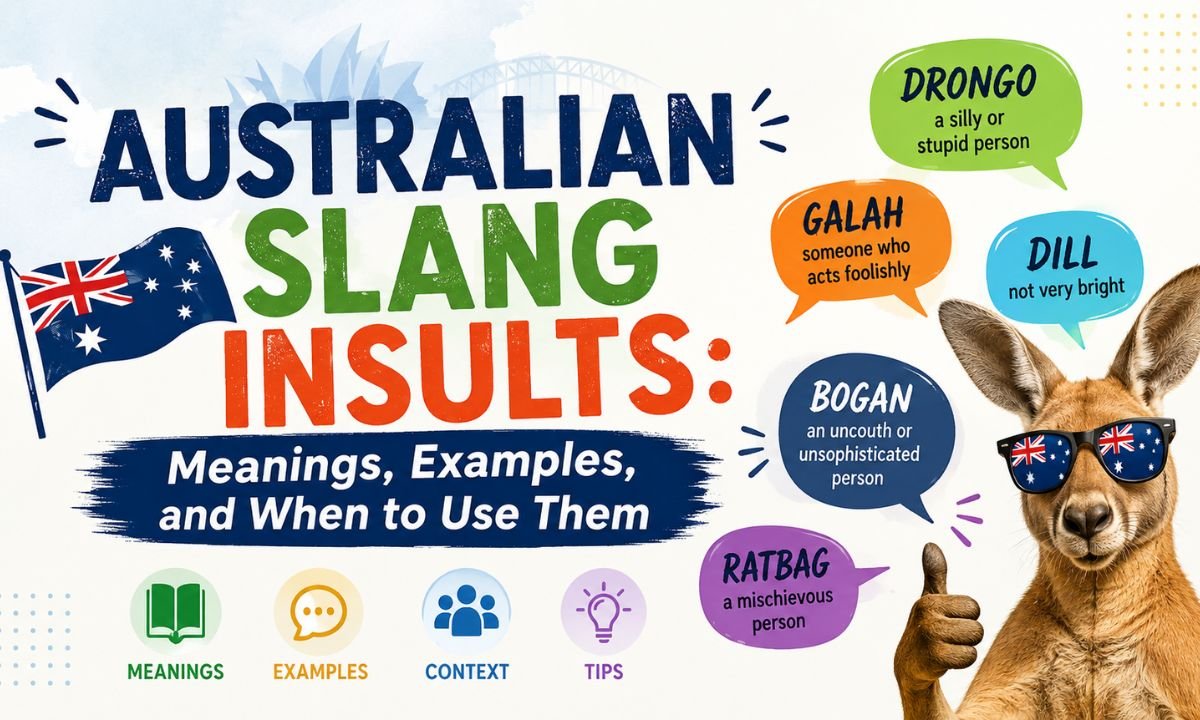
Australians have a knack for turning everyday words into cheeky insults that somehow still sound friendly. From calling a mate a drongo to teasing someone for being a bit of a day, this style of banter is woven deeply into everyday conversation across the country.
This guide breaks down the most common Aussie insults, explains the tone behind each one, and shows when a word is harmless teasing versus genuinely rude. By the end, you will know exactly which terms to use with friends and which ones to steer clear of entirely.
What Are Australian Slang Insults
Australian slang insults are informal words used to tease, mock, or mildly criticize someone, often without any serious malice behind them. Many of these terms started as regional or working-class expressions and have since become part of mainstream Australian English.
- They range from playful nicknames to genuinely harsh put-downs
- Tone and delivery often matter more than the literal meaning
- Many are used affectionately between close friends
- The same word can shift meaning depending on who says it and how
Why Context and Tone Change Everything
The line between friendly banter and a real insult usually comes down to relationship, delivery, and setting rather than the word itself.
- Consider who is speaking and how well they know the other person
- Notice the tone of voice or the way the message is written
- Look at whether laughter, smiling, or a joking follow-up accompanies it
- Think about the setting, since a pub chat is very different from a workplace
Quick Reference Table of Common Aussie Insults
| Aussie Term | Meaning | Tone |
| Drongo | Foolish or clumsy person | Mild |
| Galah | Silly or loud person | Mild |
| Dill | Foolish person | Mild |
| Dag | Dorky or unfashionable person | Playful |
| Ratbag | Mischievous troublemaker | Playful |
| Bludger | Lazy person who avoids work | Mild to medium |
| Bogan | Rough or unrefined person | Context dependent |
| Wanker | Arrogant or self-important person | Rude |
| Tosser | Obnoxious or irritating person | Rude |
| Boofhead | Silly or thick headed person | Playful |
The Most Common Australian Insults Explained
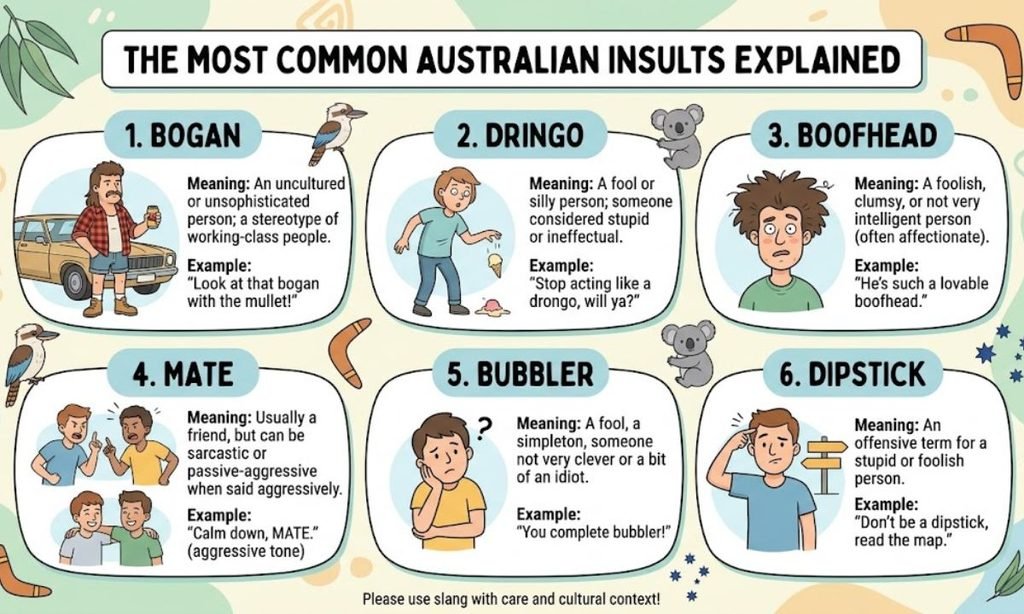
Drongo
Meaning a foolish or clumsy person. Commonly heard as “don’t be such a drongo” among mates joking around.
Galah
Named after the noisy pink and grey bird, used for someone acting silly or loud. Best used casually with friends who won’t take it seriously.
Dill
A gentle way of calling someone foolish, often used toward children or close friends without any real sting.
Dag
Describes someone slightly unfashionable or dorky, frequently used affectionately rather than as a genuine put-down.
Ratbag
A playful term for someone mischievous or a bit of a troublemaker, often used toward kids or cheeky friends.
Bogan
Refers to someone seen as unrefined or rough around the edges, and its tone depends heavily on context since it can sound classist if used carelessly.
Bludger
Someone who avoids work or relies on others, commonly used in casual complaints about a lazy coworker or housemate.
Wanker
A stronger term for someone arrogant or full of themselves, generally too rude for formal or professional settings.
Sook
Used for someone who complains or sulks easily, often said with light teasing rather than real criticism.
Nong
Another mild word for a foolish person, similar in tone to dill or drongo.
Dropkick
Describes someone seen as useless or a bit pathetic, with a tone that can range from playful to genuinely dismissive.
Yobbo
Refers to a loud, rowdy, or poorly behaved person, often used to describe rough behavior in public.
Tosser
Similar to wanker in meaning, used for someone irritating or self-important, and considered fairly rude.
Mug
A softer term for someone easily fooled or a bit naive.
Tool
Describes someone acting foolishly or obnoxiously, often heard in casual arguments or sports commentary.
Goose
A light, almost affectionate term for someone being silly.
Muppet
Borrowed internationally but used commonly in Australia for someone acting clueless.
Gronk
A stronger insult implying someone is clumsy, unintelligent, or lacking manners.
Pelican
An old-school term occasionally used for someone acting foolishly, tied to classic Australian humor.
Boofhead
A friendly insult for someone being a bit thick headed, usually said with a smile.
Funny Australian Insults That Sound Hilarious
Australians are famous for colorful, almost poetic insults that lean more toward comedy than cruelty.
- You bloody galah
- You absolute drongo
- What a pork chop
- You proper dill
- Head like a dropped pie
- As useful as an ashtray on a motorbike
These expressions work well specifically because they sound too silly to genuinely offend anyone.
Mild Aussie Insults You Can Use as Friendly Banter
Some terms are gentle enough to use almost anywhere among people who know you well.
- Drongo and dill are nearly interchangeable in tone
- Galah and dag both lean toward playful teasing rather than criticism
- Ratbag and nong work especially well with kids or close friends
- Many mild insults actually function as affectionate nicknames over time
Strong Australian Insults and Where They Cross a Line
A handful of terms carry real bite and are better avoided in polite company.
- Wanker and tosser both signal genuine irritation or contempt
- Dropkick can sound dismissive depending on delivery
- Gronk carries a sharper edge than most mild insults
- Context, tone, and relationship decide whether these feel like banter or a genuine attack
The History Behind Australia’s Insult Culture
Much of this slang traces back to working class communities, rural regions, and larrikin humor that valued wit over formality. Early Australian English borrowed heavily from British slang, then reshaped it with local references, animal names, and self-deprecating humor that became a defining feature of the national identity.
Australian Insults for Someone Who Is Being Foolish
- Drongo
- Dill
- Galah
- Nong
- Boofhead
Among these, galah and boofhead tend to sound the most lighthearted, while drongo and dill remain the most widely recognized nationwide.
Australian Slang for an Annoying or Arrogant Person
- Wanker
- Tosser
- Tool
- Yobbo
- Bogan, depending heavily on context
These terms carry noticeably more weight than the foolishness category and are generally reserved for genuine frustration.
Aussie Insults in Pop Culture and Media
Australian film, television, and comedy have played a huge role in spreading this slang internationally, with characters frequently trading insults like drongo, galah, and bogan as a form of comedic identity. This exposure has helped many of these words become recognizable even to audiences outside Australia.
State by State Differences in Aussie Insults
While most of these terms are understood nationwide, usage can vary slightly by region.
- Bogan is widely used across every state but carries different social connotations depending on the area
- Coastal regions tend to favor lighter, beach-influenced slang
- Rural communities often keep older, classic terms like pelican and boofhead alive longer than cities do
How Tourists Can Avoid Misusing Aussie Slang
Visitors picking up local slang should tread carefully before trying it out.
- Start with clearly playful terms like galah or dag
- Avoid stronger words like wanker or tosser until you understand local tone
- Watch how locals use a term before repeating it yourself
- When unsure, ask a local friend whether a word is safe to use
How Australians Use Insults Between Friends
Aussie friendships often include a surprising amount of good-natured mockery, and this is generally seen as a sign of closeness rather than conflict.
- Roasting a mate is often a way of showing familiarity
- The word mate frequently softens an insult immediately after it
- Genuine offense usually shows through tone, silence, or a change in body language rather than the word itself
Australian Insults vs American Insults
| Australian Term | Closest American Equivalent |
| Drongo | Idiot |
| Galah | Goofball |
| Bludger | Slacker |
| Bogan | Redneck-adjacent, though not identical |
American slang tends to lean more direct, while Australian equivalents often add humor or animal imagery to soften the blow.
Are Australian Slang Insults Still Used Today
Many classic terms remain common, though usage patterns are shifting among younger generations who increasingly mix traditional slang with newer internet-driven expressions. Words like drongo and galah still appear regularly in everyday speech, while some older or more regional terms are gradually fading from daily use, particularly in larger cities.
Aussie Insults That Sound Worse Than They Actually Are
A few terms sound harsher than their real social impact.
- Drongo sounds blunt but is almost always harmless
- Dropkick can sound severe out of context but is often used jokingly
- Bogan sounds negative on paper but is sometimes used with genuine affection depending on the speaker
Australian Insults You Should Avoid With Strangers
- Save wanker and tosser for situations involving people you know well
- Bogan can sound classist if aimed at someone unfamiliar
- Workplace settings call for far milder language than a night out with mates
- Reading the room before using slang prevents unnecessary awkwardness
How to Use Australian Insults Without Sounding Forced
- Do not force slang into every sentence just to sound local
- Match the energy and tone of the person you are speaking with
- Learn what a word actually means before repeating it
- Start with mild expressions before attempting stronger ones
Australian Insults in Texting and Online Chats
- Drongo in a text usually signals light frustration or a joke
- Galah appears often in group chats reacting to something silly
- Bogan shows up frequently in social media comment sections
- Gaming chats often borrow the same casual roasting style found in everyday Aussie conversation
Frequently Asked Questions
What is a common Australian insult?
Drongo is one of the most widely recognized and commonly used Australian insults.
What is an Australian slang word for idiot?
Drongo, dill, and galah are all common ways to describe someone acting foolish.
What does bogan mean?
Bogan describes someone seen as rough or unrefined, and its tone depends on context.
What is a funny Australian insult?
Phrases like you bloody galah or head like a dropped pie are considered playful and comedic.
Are Australian insults usually serious?
Most are lighthearted teasing, though stronger terms like wanker can carry real irritation.
Why do Australians insult their friends?
Playful insults are often a sign of closeness and familiarity rather than conflict.
Which Australian slang insults are still popular?
Drongo, galah, dill, and bogan remain widely used across most of the country today.
Conclusion
Australian slang insults are less about literal meaning and more about tone, timing, and relationship. Words like drongo, galah, dill, and dag work well as playful teasing among friends, while terms like wanker and tosser carry real weight and are best avoided with people you do not know well.
Understanding the word, the audience, and the setting is the safest way to use this colorful part of Australian English.