

If you’ve ever heard someone call a mustache a “cookie duster” or a “soup strainer,” you already know facial hair has its own language. Mustache slang has been around for generations, but it keeps evolving as new terms pop up on TikTok, in barbershops, and in everyday conversation.
Whether you’re growing one out for November, teasing a friend, or just want to sound a little more clever the next time you talk about upper-lip hair, this guide breaks down the most popular, funniest, and coolest slang terms for mustache in 2026.
You’ll also learn how each generation uses these words differently, how to use slang naturally without sounding forced, and the common mistakes people make when they try.
Quick Reference Table
| Slang Term | Meaning | Best Used In |
| Stache | Short, casual word for mustache | Everyday talk, texts, captions |
| Cookie Duster | Playful nickname for brushing away crumbs | Jokes with friends |
| Lip Sweater | A mustache that looks warm and fuzzy | Casual humor |
| Crumb Catcher | Refers to trapping food while eating | Teasing at meals |
| Flavor Saver | Jokes about holding onto food or drink | Lighthearted banter |
| Mouth Brow | Compares the mustache to an eyebrow | Memes, online jokes |
| Soup Strainer | Classic term about catching liquids | Old-school humor |
| Face Caterpillar | A wiggly, fuzzy comparison | Gen Z slang, memes |
| Lip Rug | A “rug” of hair above the lip | Casual conversation |
| Nose Neighbor | Facial hair sitting just under the nose | Internet slang |
| Fuzz Bar | A thin strip of soft facial hair | Light teasing |
| Upper Lip Beard | Describes a thick, bushy mustache | Descriptive slang |
| Gentleman’s Stripe | A neat, classy mustache | Style-focused talk |
| Retro Stache | A vintage-inspired mustache | Fashion and style chats |
| Mini Beard | A small mustache resembling a tiny beard | Casual description |
| Lip Hedge | A bushy, untrimmed mustache | Humor, exaggeration |
| Vintage Whisker | An old-fashioned mustache style | Style commentary |
17 Popular Slang Terms for Mustache
Mustache slang usually falls into a few categories: it’s either funny, descriptive, or stylish. Below are the most widely used terms, what they mean, and when to actually use them.
Stache
“Stache” is simply a shortened version of mustache. It’s the most common and versatile slang word out there, and it works in almost any casual setting.
- Meaning: A quick, informal way to say mustache.
- When to use it: Texting, social media captions, everyday chats.
- When not to use it: Formal writing or professional documents.
Cookie Duster
This term jokes about a mustache brushing away crumbs after someone eats something messy, like a cookie.
- Meaning: A humorous nickname implying the mustache sweeps up crumbs.
- When to use it: Joking around with friends or family.
- When not to use it: Serious or respectful compliments.
Lip Sweater
“Lip sweater” pokes fun at a mustache looking thick and cozy, almost like it’s keeping the upper lip warm.
- Meaning: A playful comparison between a mustache and a small sweater.
- When to use it: Casual humor or meme captions.
- When not to use it: Formal or sincere conversations.
Crumb Catcher
Similar to “cookie duster,” this term focuses on the mustache’s tendency to trap bits of food while eating.
- Meaning: Implies the mustache catches crumbs during meals.
- When to use it: Playful teasing among close friends.
- When not to use it: Around strangers or in professional settings.
Flavor Saver
A classic bit of humor, “flavor saver” jokes that a mustache holds onto leftover food or drink for later.
- Meaning: A comedic phrase about trapped flavor or crumbs.
- When to use it: Lighthearted, low-stakes conversations.
- When not to use it: Formal introductions or written work.
Mouth Brow
This meme-friendly term compares a mustache to an eyebrow that’s grown in the wrong place.
- Meaning: A playful nickname likening the mustache to an eyebrow.
- When to use it: Online jokes, memes, casual banter.
- When not to use it: Professional communication.
Soup Strainer
One of the oldest and most well-known mustache nicknames, “soup strainer” jokes about a mustache filtering liquids while someone eats or drinks.
- Meaning: A classic term referencing a mustache catching soup or drinks.
- When to use it: Old-school humor, casual settings.
- When not to use it: Formal writing.
Face Caterpillar
A favorite among younger generations, this term compares a mustache to a fuzzy caterpillar sitting on the face.
- Meaning: A meme-inspired nickname for a fuzzy mustache.
- When to use it: Social media captions, Gen Z-style humor.
- When not to use it: Serious or respectful contexts.
Lip Rug
This term describes a thick or noticeably hairy mustache, comparing it to a small rug.
- Meaning: A hairy patch above the upper lip.
- When to use it: Casual descriptions or friendly teasing.
- When not to use it: Professional or formal writing.
Nose Neighbor
This slang term simply highlights the mustache’s location, right below the nose.
- Meaning: Facial hair sitting just underneath the nose.
- When to use it: Online jokes and casual chats.
- When not to use it: Formal contexts.
Fuzz Bar
“Fuzz bar” describes a thin, soft strip of mustache hair, often used for lighter or early-growth mustaches.
- Meaning: A soft, narrow strip of facial hair.
- When to use it: Light teasing about early mustache growth.
- When not to use it: Serious grooming discussions.
Upper Lip Beard
This term is used when a mustache is thick enough to resemble a mini beard on its own.
- Meaning: A bushy, full mustache that looks beard-like.
- When to use it: Descriptive, casual conversation.
- When not to use it: Overly formal settings.
Gentleman’s Stripe
A more polished term, “gentleman’s stripe” refers to a neat, well-groomed mustache that adds a touch of class.
- Meaning: A tidy, stylish mustache.
- When to use it: Style talk, compliments, grooming discussions.
- When not to use it: Sarcastic or joking contexts.
Retro Stache
This term is used for mustaches styled after past decades, like the ’70s or ’80s.
- Meaning: A mustache inspired by vintage fashion trends.
- When to use it: Fashion talk, style commentary.
- When not to use it: Unrelated casual chats.
Mini Beard
Used to describe a small mustache that resembles a tiny beard in shape or thickness.
- Meaning: A compact mustache with beard-like density.
- When to use it: Casual grooming or style conversations.
- When not to use it: Technical or formal writing.
Lip Hedge
This exaggerated term compares an untrimmed, bushy mustache to an overgrown hedge.
- Meaning: A thick, unkempt mustache.
- When to use it: Humor and playful exaggeration.
- When not to use it: Respectful or formal compliments.
Vintage Whisker
This term is often used to describe an old-fashioned mustache style tied to a particular era.
- Meaning: A classic, throwback mustache look.
- When to use it: Style and grooming conversations.
- When not to use it: Everyday casual banter unrelated to style.
Generational Slang Comparison
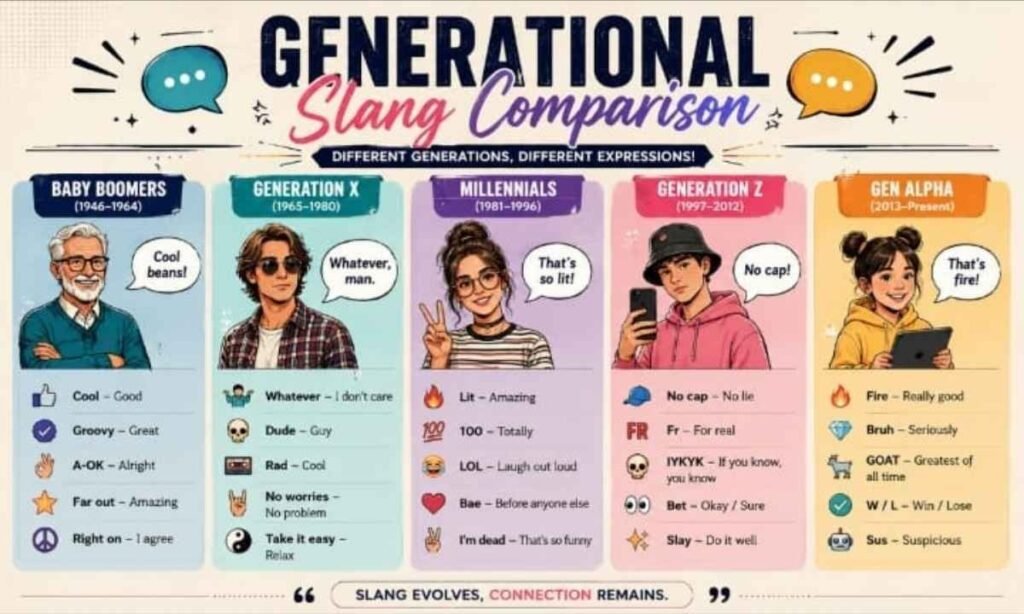
Not every generation uses the same mustache slang. Here’s how word choice tends to shift by age group.
Gen Z
Gen Z leans toward creative, meme-inspired terms like “face caterpillar” and “mouth brow.” These phrases usually spread fast through TikTok, gaming communities, and online meme culture.
Millennials
Millennials tend to favor playful, humor-driven slang such as “flavor saver” and “lip rug.” Many of these terms originated in internet forums, sitcoms, and early meme culture from the 2000s and 2010s.
Older Generations
Older speakers usually stick to classic, time-tested terms like “soup strainer” and “cookie duster.” These phrases were popular decades before social media existed and are still commonly heard in barbershops today.
How to Use Slang Naturally Without Sounding Awkward
Slang only works when it fits the moment. Here’s how to use mustache slang the right way.
Match the Tone
Slang works best in relaxed, friendly conversations. If the mood is serious or sincere, skip the jokes and just say “mustache.”
Understand the Context
Some terms, like “cookie duster,” are meant purely for humor. Others, like “gentleman’s stripe,” carry a more stylish or complimentary tone. Pick the term that matches what you’re actually trying to say.
Consider the Social Setting
Slang that works great with close friends might feel out of place with coworkers or new acquaintances. Read the room before you drop a nickname like “lip hedge” in a professional setting.
Common Slang Mistakes
Even fun slang can backfire if it’s used incorrectly. Watch out for these common missteps.
Using Outdated Slang
Terms that were popular decades ago, like some older nicknames, can sound strange or dated to younger audiences today. Know your audience before using older slang.
Using Slang in Formal Writing
Words like “stache” or “lip sweater” don’t belong in resumes, business emails, or formal documents. Stick to “mustache” in professional writing.
Overusing Slang
Dropping five different mustache nicknames in one conversation can feel forced. Pick one or two terms and let them land naturally.
Practice Section
Test what you’ve learned with these quick exercises.
Fill in the Blanks
- After lunch, crumbs were stuck in his ______ (hint: mustache slang for trapping food).
- She said his mustache looked like a tiny ______ (hint: comparison to an eyebrow).
- His neatly trimmed mustache earned him the nickname ______ (hint: a stylish, classy term).
Choose the Correct Slang
Question: Which term best describes a bushy, overgrown mustache? A) Gentleman’s Stripe B) Lip Hedge C) Fuzz Bar
Answer: B) Lip Hedge
Rewrite Into Slang
Try rewriting this sentence using mustache slang: “He has a thick mustache that catches food while he eats.” Example rewrite: “He’s rocking a serious crumb catcher these days.”
Funny Mustache Slang for Friends and Social Media
Funny Nicknames for a Mustache
Some of the funniest options for teasing a friend include cookie duster, soup strainer, and lip sweater. These terms are meant to get a laugh, not a compliment.
Playful Mustache Slang for Friends
Among close friends, terms like flavor saver and crumb catcher work well for light, good-natured teasing without crossing into rude territory.
Mustache Slang for Social Media Captions
For captions and comments, trendy terms like face caterpillar or mouth brow tend to perform well since they’re meme-friendly and instantly recognizable to younger audiences.
Mustache Slang in Pop Culture and Everyday Conversation
Famous Mustache Terms from Movies and TV
Mustache slang has shown up in sitcoms, cop shows, and comedy films for decades, often used by characters to poke fun at facial hair in a lighthearted way.
Internet Slang and Modern Mustache Names
Newer terms like face caterpillar and mouth brow gained traction through memes, Reddit threads, and short-form video content, spreading quickly across online communities.
Regional Names and Slang for Mustaches
Certain regions and countries have their own unique nicknames for mustaches, often shaped by local humor, history, and cultural references passed down through generations.
Why People Use Funny Slang for Mustaches
Making Conversations More Humorous
Slang adds personality to everyday conversations. A simple nickname like “cookie duster” can turn a plain observation into a shared laugh.
Showing Personality and Style
The slang someone chooses often reflects their sense of humor or personal style, whether they lean toward classic terms or trendy, meme-based ones.
Creating Fun Nicknames and Inside Jokes
Mustache slang often becomes part of inside jokes between friends and family, giving an everyday feature its own fun identity.
Frequently Asked Questions
What is the most common slang word for mustache?
“Stache” is by far the most widely used and casual slang term for mustache today.
What do Gen Z call a mustache?
Gen Z tends to use meme-inspired terms like “face caterpillar” or “mouth brow.”
Is “soup strainer” still used today?
Yes, though it’s more common among older generations and in classic humor.
What’s a stylish way to refer to a mustache?
Terms like “gentleman’s stripe” or “vintage whisker” carry a more polished, complimentary tone.
Can I use mustache slang in professional writing?
No, it’s best to stick with the word “mustache” in formal or professional contexts.
Why do people use funny nicknames for mustaches?
Funny nicknames add humor to everyday conversations and often become part of inside jokes between friends.
Conclusion
Mustache slang has stuck around for so long because it turns something ordinary into something worth talking about. From old-school classics like “soup strainer” to fresh, meme-driven terms like “face caterpillar,” there’s a nickname for every style, tone, and generation.
The key is knowing when to use them, matching the tone to the setting, and not overdoing it. Next time someone compliments (or teases) your facial hair, you’ll have plenty of clever comebacks ready to go.
1 thought on “Slang for Mustache: 19 Funny, Cool & Popular Terms to Know (2026)”