

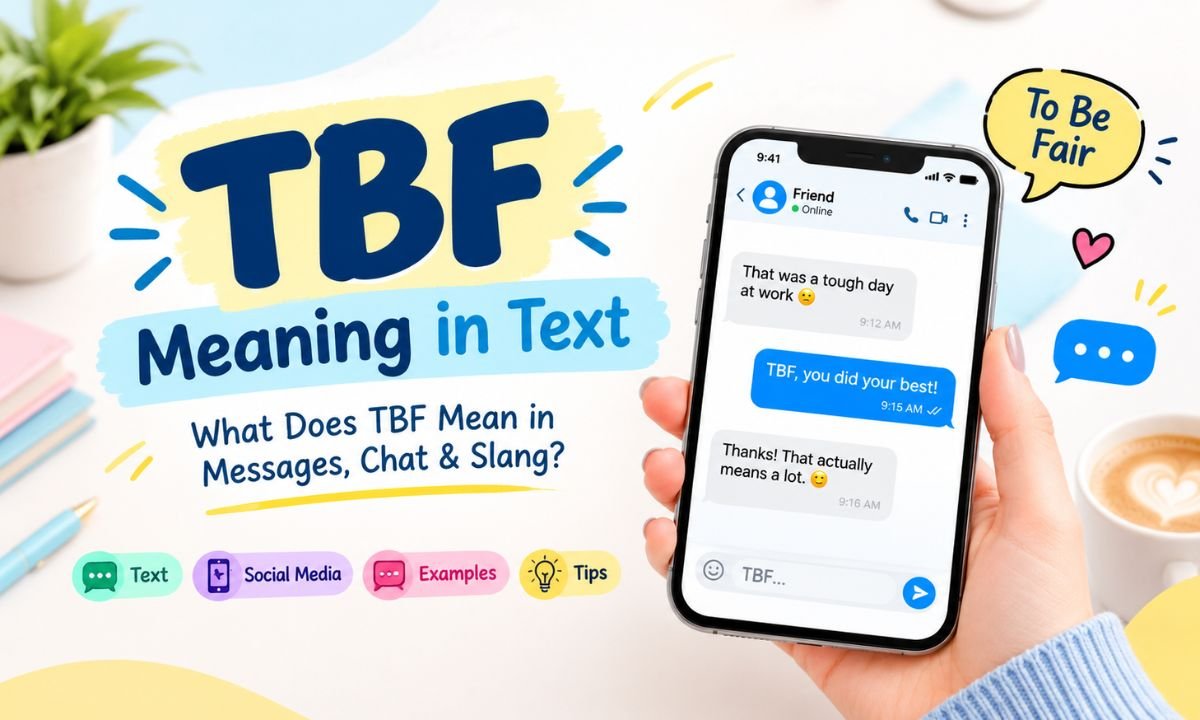
Scrolling through a group chat or a comment section and spotted the letters TBF and had no idea what they meant? You are not alone. It is one of the most common shorthand terms in modern texting, and once you know it, you will start noticing it everywhere, from Instagram captions to Discord servers.
In short, TBF stands for “to be fair,” and people use it to add balance, context, or a fair counterpoint to something that was just said. This guide breaks down exactly what it means, how to use it correctly, and how to reply when someone sends it to you.
What Does TBF Mean in Text and Chat
TBF is an abbreviation for “to be fair.” People type it before or after a statement to show they are considering another point of view rather than being one sided. It is commonly used to introduce a mitigating fact, acknowledge someone’s effort, or gently push back on a previous comment without sounding harsh.
For example, if a friend says a restaurant was slow, someone might reply, “TBF, they were fully booked tonight.” The phrase signals fairness rather than criticism.
TBF Full Form and Origin
The full form of TBF is simply “to be fair.” Like TBH (to be honest) and IMO (in my opinion), it grew out of internet forums and early texting culture, where character limits and fast typing encouraged shortened phrases.
Over time it moved from niche forums into everyday texting, Twitter threads, and now short video comment sections, becoming part of mainstream digital slang rather than a specialized term.
How People Use TBF in Everyday Conversations
TBF usually shows up in one of these situations:
- Introducing a fair counterpoint during a disagreement
- Giving someone credit even while pointing out a flaw
- Softening criticism so it does not sound blunt
- Adding missing context that changes how a situation looks
- Acknowledging that both sides have valid points
Example messages:
- “TBF, she did warn us the traffic would be bad.”
- “That movie was slow, but TBF, the ending was worth it.”
- “TBF, I would have reacted the same way.”
TBF Meaning Across Social Media Platforms
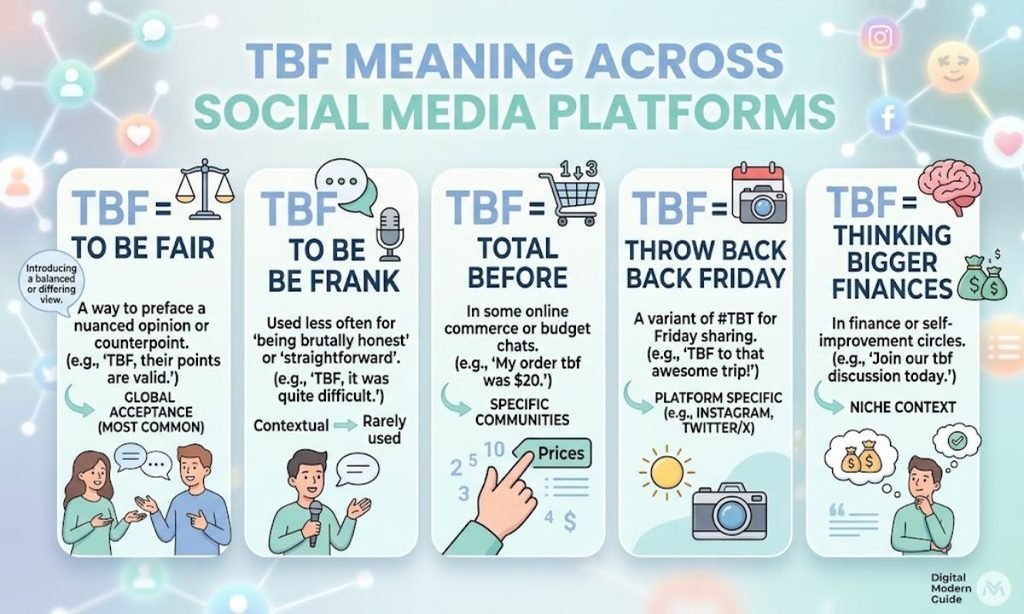
The meaning of TBF does not change from platform to platform, but the tone can shift slightly depending on where it is used.
On Snapchat and Instagram, TBF is often used casually in captions or comments to add a lighthearted balanced opinion. On TikTok, it frequently appears under videos where a commenter wants to defend the creator or explain a mistake shown in the clip.
On Reddit and Discord, TBF is common during debates or gaming discussions, where it introduces a fair point in the middle of an argument. On WhatsApp and text messages, it usually appears in one on one chats to soften a disagreement between friends or family.
Is TBF Positive, Negative, or Sarcastic
TBF is generally neutral to positive in tone. It signals fairness rather than an attack, so most people read it as thoughtful rather than rude. That said, tone always depends on context.
When paired with sarcasm markers, like extra punctuation or a joking follow up line, TBF can carry a lightly sarcastic edge. Without that context, it almost always reads as genuine and balanced.
Smart Ways to Reply When Someone Types TBF
If someone sends you a TBF statement, you have a few natural directions to take the conversation:
- Agree and build on it: “TBF, that’s true, I didn’t think of it that way.”
- Politely disagree: “TBF makes sense, but I still think it could’ve gone differently.”
- Add humor: “Okay TBF is doing a lot of work in that sentence.”
- Ask for clarification if the point is unclear: “TBF about what exactly?”
TBF Compared to Similar Chat Abbreviations
| Abbreviation | Full Meaning | Main Purpose |
| TBF | To Be Fair | Add balance or a fair counterpoint |
| TBH | To Be Honest | Share an honest opinion |
| IMO | In My Opinion | State a personal opinion |
| IMHO | In My Humble Opinion | Offer a modest personal view |
| NGL | Not Gonna Lie | Admit something candidly |
Grammar Rules for Using TBF Correctly
TBF is flexible in placement, which is part of why it spread so quickly:
- It can start a sentence: “TBF, he did apologize.”
- It can follow a statement: “That was harsh, TBF.”
- It is almost always followed by a comma when placed at the start.
- It is typically written in capital letters, though lowercase is fine in casual texting.
- It can stand alone as a short reply when someone makes a fair point.
Best Times to Use TBF (and When to Skip It)
| Situation | Use TBF | Avoid TBF |
| Texting friends or family | Yes | |
| Group chats and casual debates | Yes | |
| Social media comments | Yes | |
| Formal emails or business writing | Yes | |
| Academic papers or reports | Yes | |
| Customer service or professional messaging | Yes |
In formal writing, swap TBF for phrases like “to be fair to both sides” or “in fairness.”
Real Example Messages Using TBF
- Friendly chat: “TBF, you did warn me about the traffic.”
- Relationship talk: “TBF, we were both a little stressed that day.”
- Argument or debate: “TBF, the other team did play better in the second half.”
- Social media comment: “TBF, not everyone grew up with the same opportunities.”
- Workplace chat (casual teams only): “TBF, the deadline was moved up last minute.”
Common Mistakes People Make With TBF
- Using it in formal documents where it reads as unprofessional
- Overusing it in a single conversation, which weakens its impact
- Confusing it with TBH, even though the purpose is different
- Using it sarcastically without enough context, which can confuse the other person
TBF in Pop Culture and Everyday Speech
TBF has moved beyond typed messages and is now commonly said out loud, especially among younger generations, often pronounced as its own phrase rather than spelled out.
It regularly appears in podcast clips, streamer chats, and comment sections of viral videos, usually to add a quick, fair minded take before the conversation moves on.
Final Thoughts on TBF
TBF is a simple, widely understood way to bring balance into a conversation without sounding preachy or harsh. Once you recognize the pattern, from casual texts to Reddit threads, it becomes an easy tool to soften disagreements, add missing context, and keep online conversations feeling fair.
Frequently Asked Questions
What does TBF mean in texting?
TBF means “to be fair.” It introduces a balanced or fair point in a conversation.
What does TBF stand for in a text?
It stands for “to be fair,” used to acknowledge another side of a situation.
Is TBF slang?
Yes, it is internet and texting slang that has become mainstream across chat apps.
Is TBF rude?
No, it is generally seen as polite since it signals fairness rather than criticism.
Is TBF the same as TBH?
No, TBF means “to be fair” while TBH means “to be honest,” and they serve different purposes.
Can I use TBF in a professional message?
It is best avoided in formal emails or business writing since it reads as too casual.
What should I reply to TBF?
You can agree, add a related point, or respond with light humor depending on the tone of the chat.