

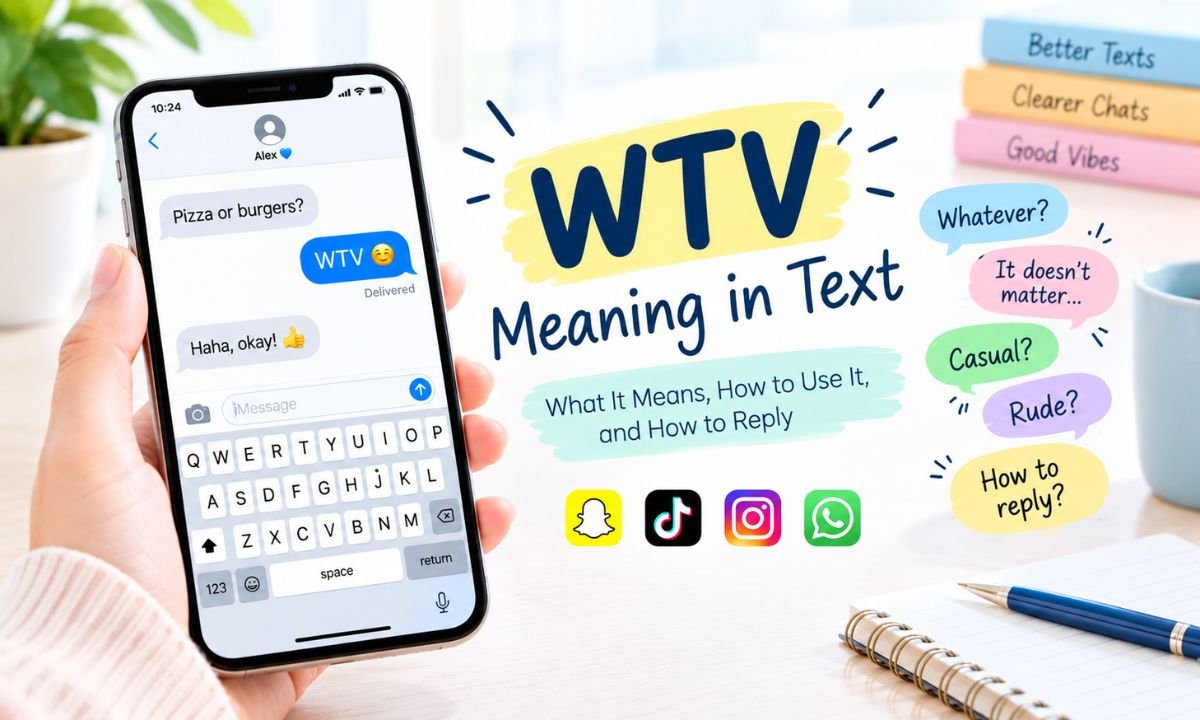
WTV is one of the most common shortcuts people type without thinking twice, yet its meaning can shift depending on who sends it and how. In most chats it simply stands for “whatever,” a quick way to show you are flexible or do not have a strong opinion.
But WTV is not always that simple. The same three letters can sound relaxed in one message and dismissive in another. This guide breaks down the real meaning, the tone shifts, platform specific uses, and the best ways to respond when someone sends it to you.
What Does WTV Mean in Text?
WTV is a texting abbreviation for the word “whatever.” It is used across messaging apps, group chats, and social media comments to express agreement, indifference, or a lack of preference in a fast, casual way.
- Most common meaning: whatever
- Common context: replying to a question with no strong opinion
- Typical users: teens and young adults in informal chats
What Does WTV Mean Depending on the Tone?
The letters stay the same, but the meaning changes with context. Reading the full conversation, not just the abbreviation, is the only way to know what someone actually means.
- Casual tone: shows the person is easygoing about the decision
- Indifferent tone: signals they genuinely do not mind either option
- Dismissive tone: can suggest the person has lost interest or patience
- Playful tone: used jokingly among friends, often paired with humor or emojis
Is WTV Rude in Texting?
WTV is not automatically rude. On its own, it is neutral, a short way to say “whatever works for me.” It becomes dismissive mainly when paired with short, cold replies, long response gaps, or when used during a disagreement.
Punctuation matters too. “WTV” without punctuation usually reads as casual, while “WTV.” with a period can feel blunt or closed off. The relationship with the sender also plays a role, since close friends can use it playfully while the same word from a stranger can feel abrupt.
How People Use WTV in Text Messages
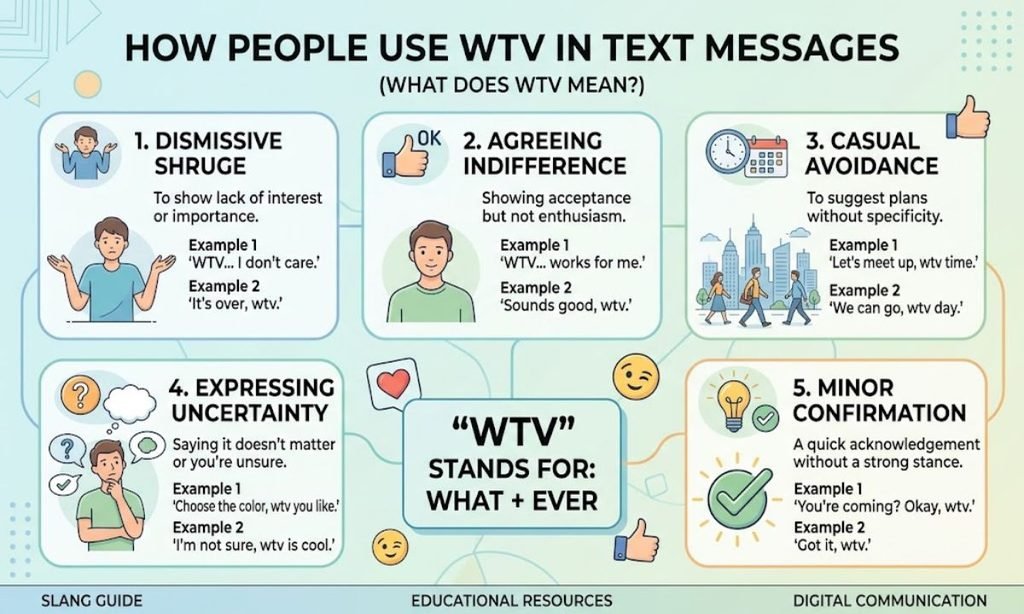
People reach for WTV in a handful of everyday situations, each with a slightly different intent.
- When they genuinely have no preference between two options
- When they are agreeing to someone else’s choice without objection
- During an argument, sometimes to avoid continuing the conversation
- When they want to move on from a topic quickly
Example: Person A: “Pizza or burgers tonight?” Person B: “WTV works for me.”
Here, WTV signals flexibility rather than disinterest, since Person B is simply open to either choice.
What Does WTV Mean on Snapchat, TikTok, Instagram, and WhatsApp?
| Platform | Common Use of WTV |
| Snapchat | Quick, casual reply to a snap or chat question |
| TikTok | Used in comments to show indifference about a topic or trend |
| Common in DMs and comment replies to keep things brief | |
| Used in group chats to agree with a plan without much discussion |
Across all four platforms, the core meaning stays the same, only the surrounding slang and emoji shift the tone slightly.
How to Reply When Someone Says WTV
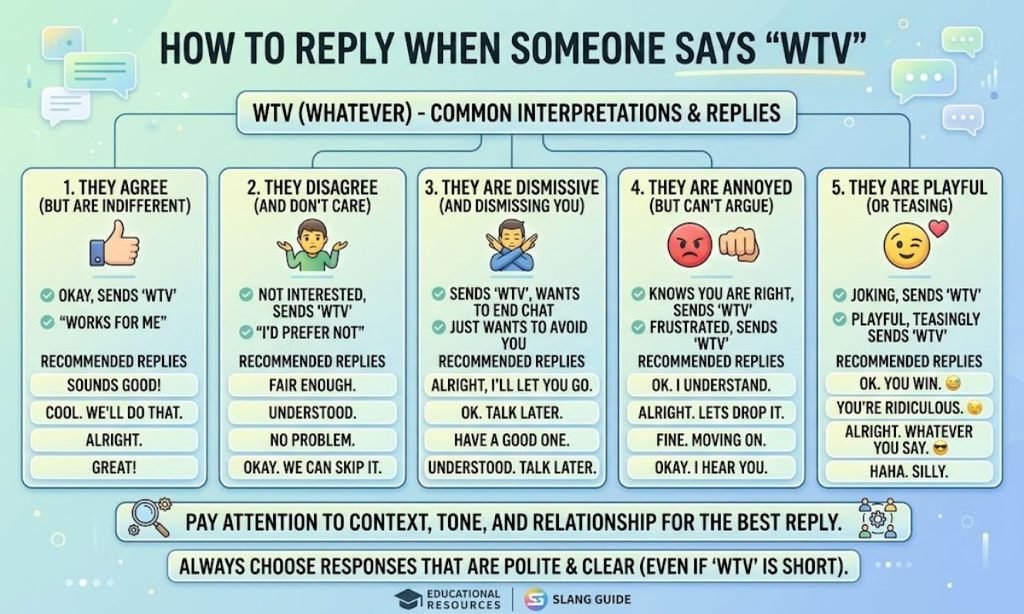
The right reply depends on how the WTV was sent.
- Friendly reply: “Haha, you choose then.”
- Funny reply: “Wow, so decisive.”
- Calm reply: “Okay, no worries either way.”
- If it feels rude: “Are you sure you’re okay? You seem a bit off.”
Matching the tone of the original message usually keeps the conversation comfortable.
WTV vs Similar Texting Abbreviations
WTV is often grouped with other short texting terms, but each carries a distinct nuance.
- WTV vs Whatever: identical meaning, WTV is simply the shortened form
- WTV vs IDC: IDC (“I don’t care”) can sound stronger or more blunt
- WTV vs IDK: IDK means “I don’t know,” a knowledge gap rather than indifference
- WTV vs NVM: NVM (“never mind”) drops a topic entirely instead of staying flexible
- WTV vs TBH: TBH introduces an honest opinion, while WTV avoids stating one
Is WTV the Same as Whatever?
In ordinary texting, yes, WTV is simply a shortened form of “whatever.” People shorten it mainly for speed while typing on mobile keyboards. The tone can differ slightly since the abbreviated form often feels more casual, while typing out the full word “whatever” can sometimes read as more deliberate or emphatic.
Is WTV Appropriate for Professional Messages?
WTV is informal and generally not suitable for work emails, client messages, or official communication. It can come across as careless or unprofessional in a business setting, even if that is not the intent.
Better alternatives for professional writing include:
- “Either option works for me.”
- “I don’t have a preference.”
- “Whatever you prefer.”
- “I’m fine with either option.”
The Origin and History of WTV as Texting Slang
WTV grew out of the same texting culture that produced abbreviations like LOL and BRB, shaped by early mobile keyboards with character limits and slow typing speeds. As SMS and instant messaging became common in the early 2000s, shortening frequent words like “whatever” became a natural habit that carried over into modern chat apps and social platforms.
How Generation Differences Affect the Way WTV Is Used
Younger texters tend to use WTV frequently and casually, often without any negative intent behind it. Older users or those less familiar with texting shorthand may read the same abbreviation as blunt or careless, since full sentences are still the norm in their communication style. This generational gap is a common source of misread tone in family or workplace group chats.
Common Mistakes People Make When Reading WTV
- Assuming it always means the sender is upset or annoyed
- Ignoring the rest of the conversation for context clues
- Treating it the same across every platform and relationship
- Reading a single word reply as the sender’s full emotional state
How Emojis and Punctuation Change the Meaning of WTV
Adding an emoji, like a laughing face or a shrug, softens the tone and signals humor rather than dismissal. A trailing period or all capital letters, such as “WTV.” or “WTV!!,” tends to sharpen the tone and can read as frustration. Without any punctuation, WTV usually lands as neutral and relaxed.
Alternatives to WTV for Clearer Communication
When clarity matters more than speed, a short full sentence avoids any risk of being misread.
- “I’m happy with either choice.”
- “You decide, I’m flexible.”
- “No strong opinion here.”
- “Either works, your call.”
WTV Meaning in Text: Quick Reference Guide
| Text | Meaning | Typical Tone |
| WTV | Whatever | Casual |
| WTV works | Whatever works for me | Flexible |
| WTV, you choose | Whatever, you decide | Indifferent |
| WTV lol | Whatever, said lightly | Playful |
| WTV. | Whatever | Can sound dismissive |
Frequently Asked Questions
What does WTV mean in text?
WTV is short for “whatever,” used to show a lack of preference or agreement with someone else’s choice.
What does WTV stand for?
It stands for the single word “whatever,” shortened for faster typing in chats.
Is WTV short for whatever?
Yes, WTV is simply an abbreviated version of “whatever” used in texting and online chat.
Is WTV rude in texting?
Not by default, it only feels rude when paired with a cold tone, punctuation, or a tense conversation.
What does WTV mean on Snapchat?
On Snapchat, WTV is used the same way as elsewhere, a quick, casual reply showing flexibility.
What does WTV mean on TikTok?
On TikTok, WTV usually appears in comments to express mild indifference about a video or topic.
How do you respond to WTV?
Match the tone, a light joke or casual reply works well unless the message feels genuinely upset.
Conclusion
WTV usually means “whatever” in text messages and online chats. Depending on context, it can express flexibility, indifference, agreement without enthusiasm, or mild dismissal.
The surrounding conversation, punctuation, and relationship between the people involved are what actually determine the tone, not the abbreviation itself.